

Rental identity theft is when a thief pretends to be you for the purpose of renting property. Rental identity theft was not very common, historically, because landlords typically required ID to be shown in person in order to rent. During and after the COVID pandemic, many large landlords shifted to entirely online applications, taking images of identifying documents. An image of an ID is a lot easier to fake than a physical ID – which has built in security measures, like textured surfaces and UV ink.
Technology has also made it easier to produce moderately convincing fake documents. In 2025, the Habitat Company, a property manager and developer, said that “the most pressing fraud issue is the rise in fraudulent lease applications involving stolen identities.” According to a 2025 survey by the National Multifamily Housing Council, a trade association for the property management industry, over 80% of respondents experienced applications involving fraudulent documents. NMFC suggested that as much as a quarter of the rental industry’s bad debt, and a quarter of eviction filings could be from fraudulent applications.
The industry’s answer appears to be more technology: credit checks and document verification tools, but it is apparent that they don’t catch all fraudulent applications. At the Holland Law Firm, we’re also seeing this trend. Victims of rental identity theft seek our help, sometimes where the thief apparently rented multiple properties simultaneously. Multiple rentals suggests that the fraud was not committed by an individual unable to get housing, but by a fraudster seeking money by illegally subletting the apartments that they fraudulently rented.
Rental ID theft is a real problem for consumers, as it leaves them to deal with a trail of debt collectors, negative credit reporting, messed up tenant screening reports, and court records generated because of the fraud. It’s also very hard for a consumer to prevent: credit freezes might help, but they will only prevent fraud if the landlord does a credit check. If they rely only on tenant screeners, a thief might slip through.
According to a 2026 survey by the Identity Theft Resource Center, titled “2026 Trends in Identity Report,” identity theft victims in general experience emotional distress, and nearly 10% are so distressed that they contemplated suicide. See this chart from page 30 of their report:
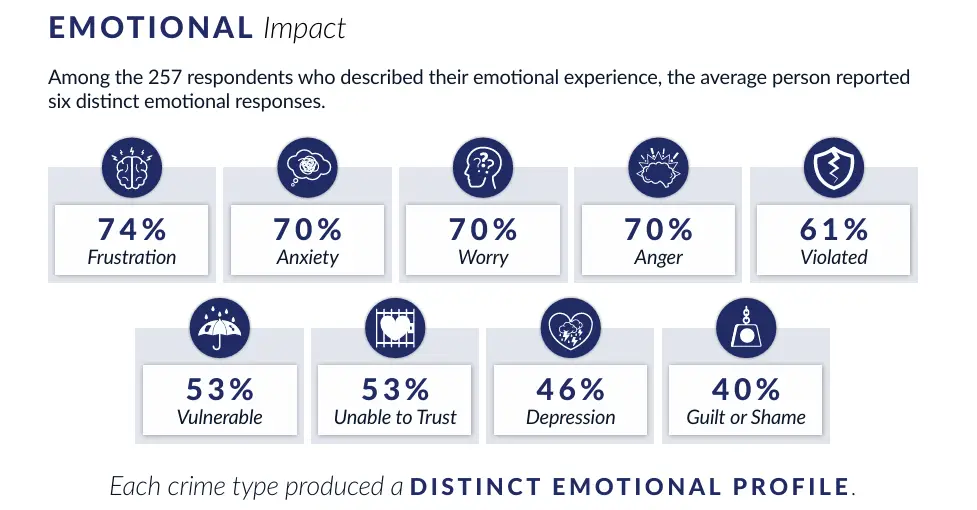
The report found that the most severe level of emotional distress occurs when there is a crime using your personally identifying information (“PII”). According to this 2026 ITRC report, victims of “crimes committed using their PII reported the highest emotional intensity, averaging eight emotional responses per person. Depression rates for these crime types reached 89 percent (89%) and 57 percent (57%), respectively, well above the overall rate of 46 percent (46%). These are the crime types discussed in Section III as the hardest to detect and resolve, and the emotional data reflects that: crimes that take longer to discover and are more difficult to untangle produce deeper and more sustained emotional harm.” Id. At p. 31. Moreover, “Across all crime types, just under ten percent (9.7%) of respondents reported experiencing suicidal ideation as a result of their identity crime. Among the small number of respondents who experienced crimes committed using their PII, that rate was 43 percent (43%). We share these findings because they reflect the reality that for some individuals, identity crime is not a financial problem. It is a crisis that affects their sense of safety, their mental health and their ability to function.” Id. (emphasis added). The 2026 report is available here: The-2026-ITRC-Trends-in-Identity-Report.pdf
This, too, fits with our own experience. Victims of identity theft often lose more than just money. Their lives are derailed by false credit reporting and collection activity. And when businesses refuse to believe victim’s claims of identity theft, the situation is much worse, as victims go through seemingly endless rounds of calls and letters, trying to prove their innocence.
If you have been a victim of identity theft, you are not alone, and there is help available. You have rights. Don’t give up, give us a call.